
RENOVATING PROPERTY IN FRANCE : COSTS & TIPS
Renovating property in France can cost €700 - €1,600/m², take 2-18 months, and often requires permits. The right team makes it stress-free.

4,7/5 Note Trustpilot

Best of Houzz 2026

Garantie Décennale
Visite & devis gratuits
Key takeaways:
- Budget €200–400/m² for a light refresh, €900–1,600/m² for a full renovation and €1,500–2,200/m² for heavy work, plus a 10–20% contingency.
- Allow 2–4 months for small projects and 6–18 months for a full renovation, permits included.
- Check the local plan (PLU) at the mairie: a déclaration préalable or a permis de construire is needed for structural, façade or extension work.
- MaPrimeRénov’, Éco-PTZ and CEE mainly apply to a main residence, with an RGE-certified contractor.
- Always ask for the décennale insurance, a detailed devis and staged payments.
Content & data updated in January 2026.
📌 Vous parlez français ? Consultez notre guide : rénovation en France depuis l’étranger.
Why choose to renovate property in France ?
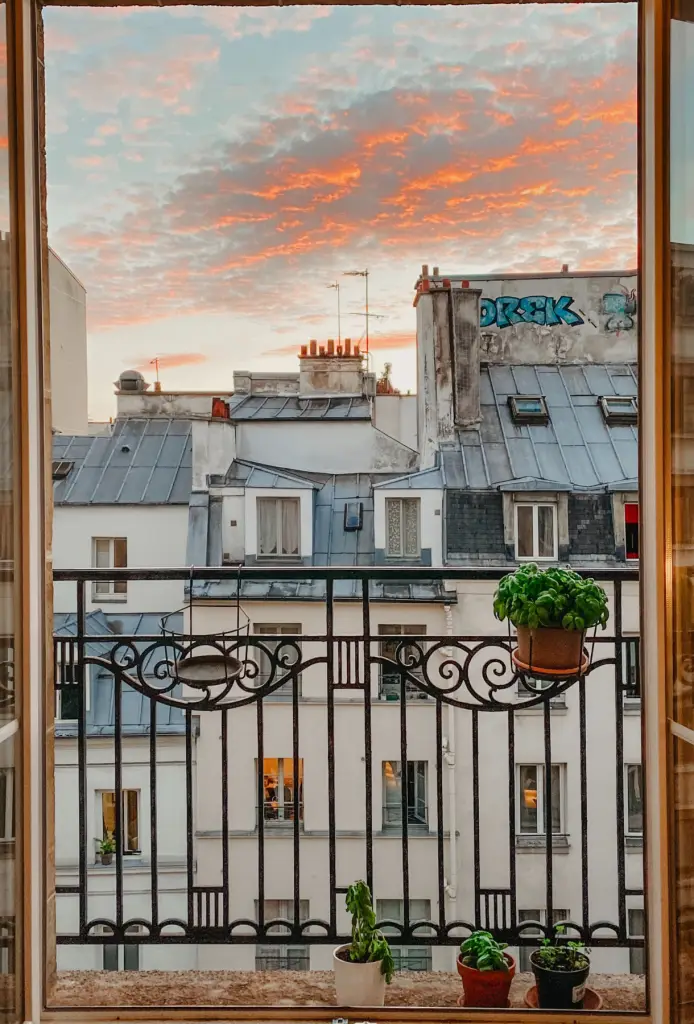
Renovating property in France means blending the country’s rich architectural heritage with modern design and comfort. From the rustic charm of a Provençal farmhouse to the elegance of a Parisian apartment, each region offers unique character and potential. But renovation isn’t only about aesthetics — it’s also a smart investment. A well-executed project can increase your property’s value, improve functionality, and elevate your overall quality of life in France.
1. Historic charm with modern flair
French properties are known for their timeless beauty and distinctive features, such as exposed beams, stone walls, and classic French windows. By choosing remodeling & renovation in France, you can maintain these charming elements while upgrading your space with the latest technology and interior design trends. A skilled renovation team will ensure that the old-world charm blends seamlessly with the modern comforts you desire.
2. Cultural and architectural significance
France places strong importance on preserving its cultural and architectural heritage. Whether you’re restoring a countryside manor, a coastal villa, or renovation a Haussmannian apartment, renovation is often subject to local and national standards that promote authenticity. Working with experienced local craftsmen and architects ensures that your renovation respects historical integrity while adapting the space for today’s lifestyle.
3. High-quality craftmanship
France is internationally recognized for its artisanal expertise — from traditional stone masonry to intricate woodwork, ironwork, and bespoke tiling. Choosing to renovate in France means gaining access to some of the finest professionals in Europe. Their attention to detail and mastery of traditional techniques ensure not just beautiful results, but durable and lasting quality.
What should you know before renovating property in France?
While renovating in France offers many rewards, there are several key aspects to consider before starting your project.

1. Understanding local regulations
Each region in France has specific building codes, zoning laws, and planning regulations. This is especially relevant when renovating properties in heritage zones or classified buildings, where strict guidelines apply to preserve architectural integrity.
Before beginning any work, it’s important to check with your local mairie (town hall) for applicable planning permissions, building permits (permis de construire, déclaration préalable de travaux), and heritage restrictions.
Partnering with a renovation company or architect familiar with French legislation can help streamline the process and avoid costly delays or penalties..
2. Choosing the right professionnals
Building the right renovation team is crucial. Seek out experienced local architects, interior designers, project managers, and general contractors who understand both the technical and cultural nuances of renovating in France.
Local professionals are often familiar with the specific styles, materials, and compliance requirements typical of French homes, especially in historic or rural areas.
Depending on your needs — especially if you’re managing a renovation in France remotely — you may work with:
- A general contractor in France (entreprise générale): handles both design and construction, including permits.
- A project manager (maître d’œuvre): coordinates the different trades and ensures quality control.
- An interior architect (architecte d’intérieur): designs the space and may also supervise execution.
- A multi-trade renovation company: manages all aspects of the renovation with its own teams.
Tip : Always check qualifications, insurance, and references before hiring. In France, registered professionals carry a “décennale” insurance covering their work for 10 years.
3. Budgeting and planning
Renovation costs in France can vary greatly depending on the location, property type, and scope of work.
Historical buildings or properties in poor condition may require specialist materials, structural work, and permits, which increase the total cost.
It’s essential to prepare a detailed budget that includes:
- Design and architectural fees
- Labor and materials
- Planning permissions and regulatory costs
- VAT (5.5%, 10%, or 20% depending on scope)
- A contingency margin of 10–20% for unexpected issues
Updated renovation cost estimates for 2026 : Due to significant inflation in building material costs throughout 2025, previous estimates of €700 to €1,100 per m² for a complete renovation are now considered outdated. To reflect the current market reality in 2026, budget expectations for a full property restoration in France should be adjusted to a more realistic range of €900 to €1,600 per m². This increase accounts for higher prices in raw materials and the specialized labor required for modern standards.
Tip: Always request a written estimate (devis) from each contractor, and ensure it includes both scope and timeline.
Top mistakes to avoid when buying a property to renovate in France
1. Prioritizing aesthetics over structure
Don’t be misled by surface materials or charming finishes. Pay close attention to the condition of the roof, load-bearing walls, plumbing, insulation, and electrical systems — these are among the most expensive elements to repair. Always bring in an expert to assess the real condition of the property.
2. Overlooking value-adding spaces
Properties with outdoor areas, open layouts, or the potential to create an extra bathroom or bedroom typically offer better return on investment. Prioritize functional kitchens and bathrooms. Preserving original materials (like parquet floors or stone walls) can also increase long-term value.
3. Ignoring local zoning rules (PLU)
Always check the local zoning plan (Plan Local d’Urbanisme) and inquire about future development projects nearby. New roads, commercial centers, or rail lines can impact your property’s future value — positively or negatively.
4. Not requesting detailed construction plans
Without precise building plans, you risk delays, cost overruns, or misinterpretations during the renovation. Make sure you receive floor plans, elevation drawings, and technical specifications before work begins.
5. Skipping the design and layout phase
Small details matter. Think ahead about the location of outlets, light switches, radiators, and door swings. Discuss every element with your contractor, and document all decisions clearly to avoid confusion during execution.
6. Not investing in project management
If you’re managing the renovation remotely, hire a qualified project manager or interior architect. Renovation requires constant oversight and coordination — don’t rely on a friend or neighbor, however well-intentioned. Experience and accountability make all the difference.
How is the renovation market evolving in France?
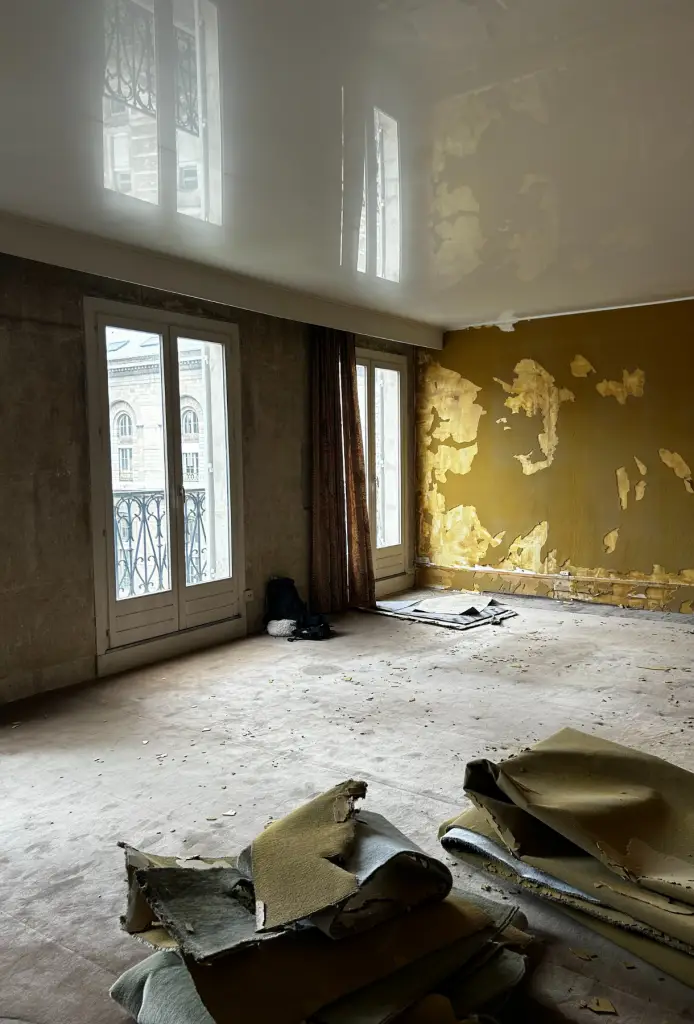
Renovation is a booming sector in France — more than just a trend, it’s a structural shift in the construction industry. With one of Europe’s oldest housing stocks and ambitious climate goals, the country is heavily investing in upgrading existing homes. Whether for energy efficiency, modern comfort, or resale value, renovation has become a national priority.
A rapidly growing market
France has around 31 million homes, and a large proportion were built before 1975, prior to the introduction of the first thermal insulation standards.
By 2023, the renovation sector reached an estimated value of €60 billion, with nearly half of that dedicated to energy-related improvements.
Today, renovation accounts for almost 50% of all building activity in France, surpassing even new construction — a clear sign of a mature and dynamic market.
Information source : Conjoncture Bâtiment – Construction, rénovation, activité et emploi BTP
What's driving the renovation boom?
1. The energy transition
France has committed to renovating 700,000 homes per year by 2030, in line with EU energy targets.
The Climate and Resilience Law prohibits the rental of poorly insulated homes (DPE rating F or G), known as “passoires thermiques”, starting progressively from 2023.
2. An ageing housing stock
Nearly 60% of homes in France are over 40 years old. These properties often require upgrades for electrical safety, accessibility, and compliance with current standards — making them prime candidates for renovation projects.
3. Evolving lifestyles
The rise of remote work has created a demand for more flexible and comfortable living spaces.
Homeowners increasingly look for:
- Extra rooms or extensions
- Outdoor areas
- Home automation (smart home features)
- Improved acoustic and thermal comfort
Who are the key renovation professionnals in France?
If you plan to renovate a property in France, you may work with several types of professionals:
- Architect / Interior Architect – for design and regulatory filings (especially in protected areas)
- Main Contractor (Maître d’œuvre) – manages the project and coordinates trades
- General Contractor – one point of contact managing all aspects of the renovation
- Separate Trades (Electrician, Plumber, Mason, etc.) – hired individually for specific tasks
Tip: If you’re renovating from abroad, consider working with a company that offers integrated project management or turnkey renovation services.
What types of properties are best to renovate in France?
France offers a wide variety of properties to renovate — from rural farmhouses to Parisian apartments. But before diving into your project, it’s important to understand the different types of renovation and identify which investments offer the best returns.
Remolding, renovation and restoration - What's the difference?
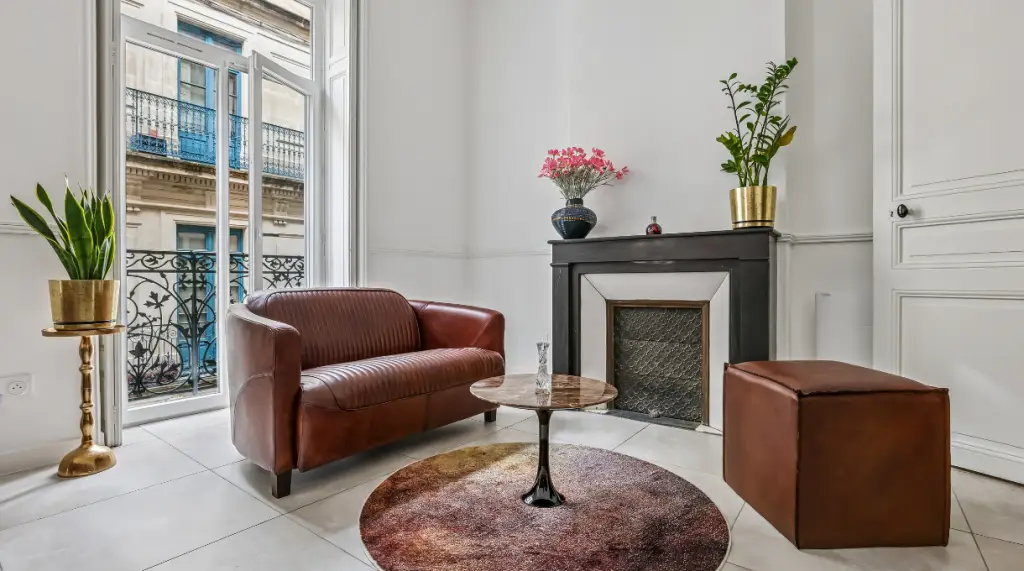
Remodeling
Definition: Major changes to the structure or layout of a property.
Goal: Reorganize interior spaces, enlarge surface area, or change the function of rooms.
Examples:
- Convert a bedroom into a bathroom
- Open up a load-bearing wall to create an open-plan living area
- Redesign the kitchen with a central island and new circuits
Note : Remodeling often requires a building permit (permis de construire), the expertise of an architect, and a significant budget. One of the most ambitious remodeling projects foreign buyers consider in rural France is converting a barn into a loft (FR guide). It is a heavy renovation: insulation of a large volume, all-new plumbing and wiring, and a change-of-use permit before any work starts.
Renovation
Definition : Upgrading an existing space without altering its structural layout.
Goal : Improve comfort, aesthetics, safety, or energy performance.
Examples :
- Update flooring, windows, or heating systems
- Bring the electrical system up to code
- Install a modern kitchen or bathroom
Note : Involves several trades, but doesn’t require major structural modifications.
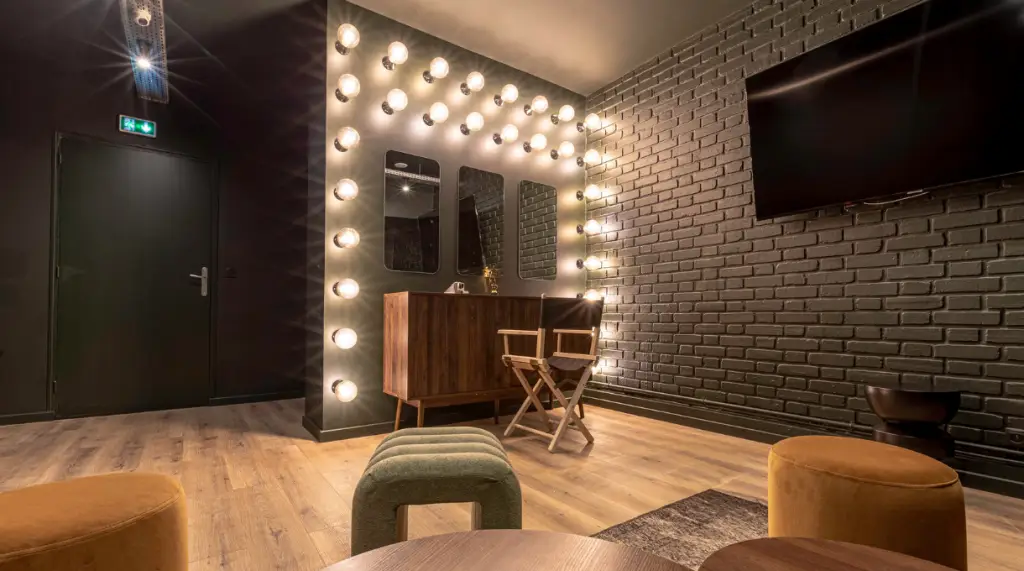
Restoration
Definition : Bringing a property back to its original condition using period-appropriate materials.
Goal : Preserve architectural character and historical value.
Examples :
- Restore original ceiling moldings or parquet flooring
- Repair stone walls or wooden beams
- Use traditional finishes like terracotta tiles or lime plaster
Note : Restoration is especially popular in Haussmann-style buildings in Paris and historical rural properties.
What are the most profitable renovation projects in France?
Investing in property renovation can be very profitable — if you choose the right type of property and location. Here are key factors to consider before buying:
Structural integrity
Check the condition of major elements: roof, walls, plumbing, insulation, electrical systems, and signs of damp. These repairs are expensive and impact your ROI.
Sewer connection
For houses, confirm the property is connected to the public sewer system (tout-à-l’égout). If not, installing an individual system can represent up to 30–40% of the property’s value.
Location and rental potential
- For buy-to-let investors, target student cities or tourist hubs with access to public transportation.
- Neighborhoods undergoing revitalization often offer better long-term appreciation.
- Proximity to shops, schools, and transport increases rental demand.
Shared housing (coliving) opportunities
Buying a large house or apartment and renting by room (especially in university towns) can deliver high yields. Coliving is increasingly popular and offers flexibility in rental strategy.
Where to buy and renovation a pied-a-terre in France : Montpellier & Île de Ré
Paris is not the only option. Many international buyers look for a second home with sunshine, the sea and a slower pace of life, while staying a few hours from Paris by train. Two regions where our teams work every week are especially popular: Montpellier and the Mediterranean coast, and La Rochelle with the Île de Ré on the Atlantic. Each has its own architecture and its own renovation constraints.
Montpellier & Hérault : Mediterranean light, city life and beachs
Montpellier is one of France’s fastest-growing cities. It combines a lively university town, an international airport and a direct high-speed train to Paris (about 3.5 hours). The beaches are 20 minutes away, and the Pic Saint-Loup vineyards and Sète are close by.
Typical properties
- Apartments in the Écusson, the historic centre: stone walls, vaulted cellars, exposed beams and high ceilings in 17th–19th century buildings.
- Seaside apartments in La Grande-Motte or Carnon. La Grande-Motte’s 1960s–70s pyramid buildings are recognised as remarkable 20th-century architecture.
- Village houses and mas in the Hérault hinterland: narrow, multi-level houses with thick stone walls.
Renovation specifics
- Summer comfort first : insulation, shutters and ventilation must keep the heat out. Air-conditioning units on façades usually need co-owners’ approval.
- Protected historic centre : the Écusson is a protected heritage area. Any visible change (windows, shutters, façade) needs approval from the Architecte des Bâtiments de France. Interior work gives you much more freedom.
- Breathable materials on old stone walls (lime plaster, breathable paints) to avoid trapping moisture.
- Site access : narrow streets and no lifts in the old town make deliveries and waste removal more complex, so plan for it in the schedule.
👉 Example: a 42 m² seaside apartment in La Grande-Motte, renovated for rental in 3.5 months for €46,000. Discover our renovation services in Montpellier.
La Rochelle & Île de Ré : Atlantic charm and protected villages
La Rochelle is a historic port city with arcaded streets and a lively old harbour. It is around 3 hours from Paris by high-speed train and has an airport with flights to the UK and other European cities. A toll bridge links it to the Île de Ré, known for its whitewashed villages, cycle paths, oyster farms and salt marshes. Saint-Martin-de-Ré’s Vauban fortifications are a UNESCO World Heritage Site.
Typical properties
- Historic apartments in La Rochelle’s old town : limestone, beams, shipowners’ townhouses in the protected historic district.
- 1970s–90s apartments near Les Minimes marina, often ideal for a full redesign.
- Rétais houses on the island: low, white-rendered houses with coloured shutters, often arranged around a courtyard.
Renovation specifics
- Strict exterior rules : much of the island is a protected site, so colours, shutters and joinery are tightly regulated. Interior design is where you can fully express your style.
- Sea air : salt corrodes standard fittings. Choose marine-grade stainless steel, brass or Qualimarine-certified aluminium, and use lime renders and breathable paints on stone.
- Humidity : a humidity-controlled ventilation system (VMC hygroréglable) prevents condensation and mould, which matters even more when the house is empty for part of the year.
- Island logistics : materials cross the bridge, and craftsmen are in high demand in summer. Plan works between autumn and spring so the house is ready for the season, and check with the town hall for any local restrictions on noisy works.
👉 Budget guide: a full renovation in La Rochelle and on the Île de Ré typically costs €900 to €1,600 per m². Discover our renovation services in La Rochelle & Île de Ré.
Which region suits your project?
| Montpellier & Hérault | La Rochelle & Île de Ré | |
|---|---|---|
| Climate | Mediterranean, hot summers | Oceanic, mild, windy |
| Lifestyle | Dynamic city + beaches + vineyards | Port city + island villages, cycling |
| Typical property | Old-town apartment, seaside flat, village house | Historic apartment, Rétais house |
| Main renovation challenge | Summer heat, heritage rules in the Écusson | Salt air, humidity, protected-site rules |
| Ideal for | Year-round use or rental investment | Holiday home, family second residence |
How much does renovating property in France cost?
Renovation costs in France can vary significantly depending on location, property type, and project complexity. For instance, major cities with high demand may drive prices up, while smaller towns with fewer contractors can offer more competitive rates.
Besides location, several other factors impact renovation prices:
Total surface area
Initial condition of the property
Energy efficiency rating (DPE)
Type of renovation (refresh, partial, full, heavy)
Accessibility of the site (floor level, delivery constraints, etc.)
Structural changes required
Average renovation costs in France (per square meter in 2027)
Light Renovation : €200 to €400 per m²
Changing flooring
Replacing interior doors
Removing old wall coverings (wallpaper, fiberglass mesh, etc.)
Repainting walls and ceilings
Intermediate Renovation : €900 to €1,600 per m²
Renovation of all rooms
Full rewiring and plumbing overhaul
Structural changes (non-load-bearing walls)
Window replacement (if needed)
Insulation upgrades
Optional interior design support
Heavy or Energy Renovation : €1,500 to €2,200 per m²
- Major structural changes (e.g. moving wet rooms, opening load-bearing walls)
- Full reconfiguration of space
- Specialist trades (architect, structural engineer)
- High-end finishes and custom furniture
For a more detailed breakdown, see our French renovation pricing guide.
What is the renovation cost per square meter in France?
In general, the larger the surface area, the lower the cost per square meter, due to economies of scale. Fixed costs like site preparation, delivery, or project management become less significant when spread over a larger area. Refer to the price ranges above based on the type and scope of work you’re planning.
How much does it cost to renovation a 100m² in France?
Renovation costs vary depending on the required work and the project size. Understanding the prices is essential to avoid unexpected surprises.
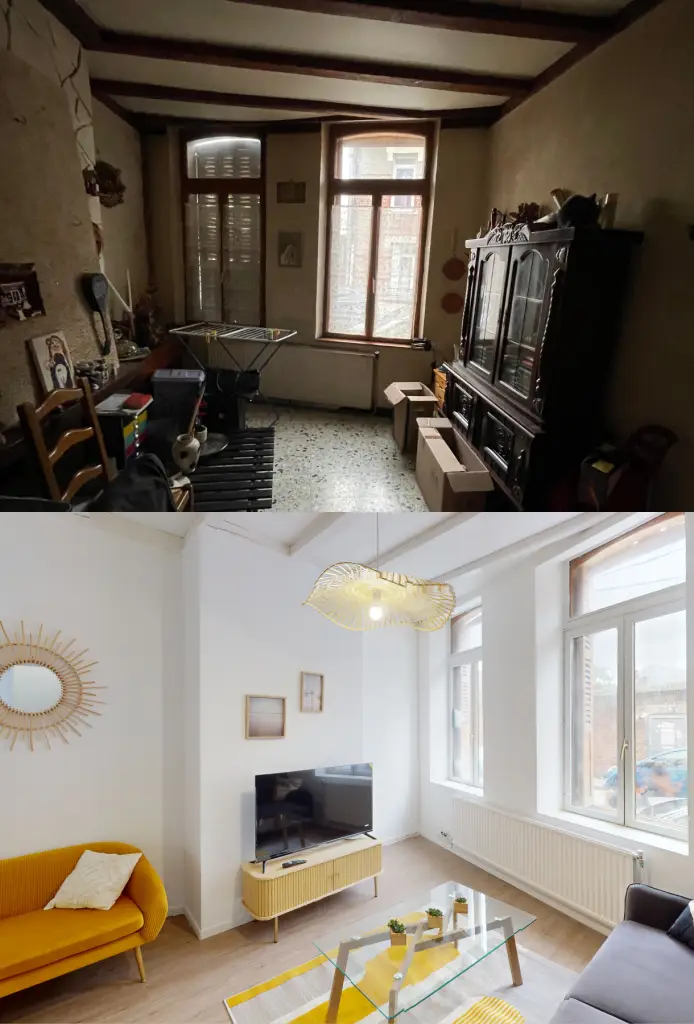
To illustrate this, let’s take the example of the Castille project – complete renovation of a house in Amiens.
Castille project price details by work package :
- SITE PREPARATION, CLEANING AND DISMANTLING€11,800
- PARTITIONING, MASONRY€16,500
- ELECTRICITY€9,200
- PLUMBING€6,200
- AIR CONDITIONING, VENTILATION, HEATING€6,600
- PLASTERING, PAINTING€18,800
- FLOOR AND WALL COVERINGS€8,600
- INTERIOR JOINERY€1,800
- BATHROOM & WC EQUIPMENT€3,900
- KITCHEN EQUIPMENT€4,800
- EXTERIOR JOINERY€4,700
- SITE HANDLING & FINAL CLEANING€1,100
- TOTAL€94,000
For the complete renovation of a 100m2 house in Amiens, the budget was €94,000, or €940/m².
Examples of property renovation (before/after)
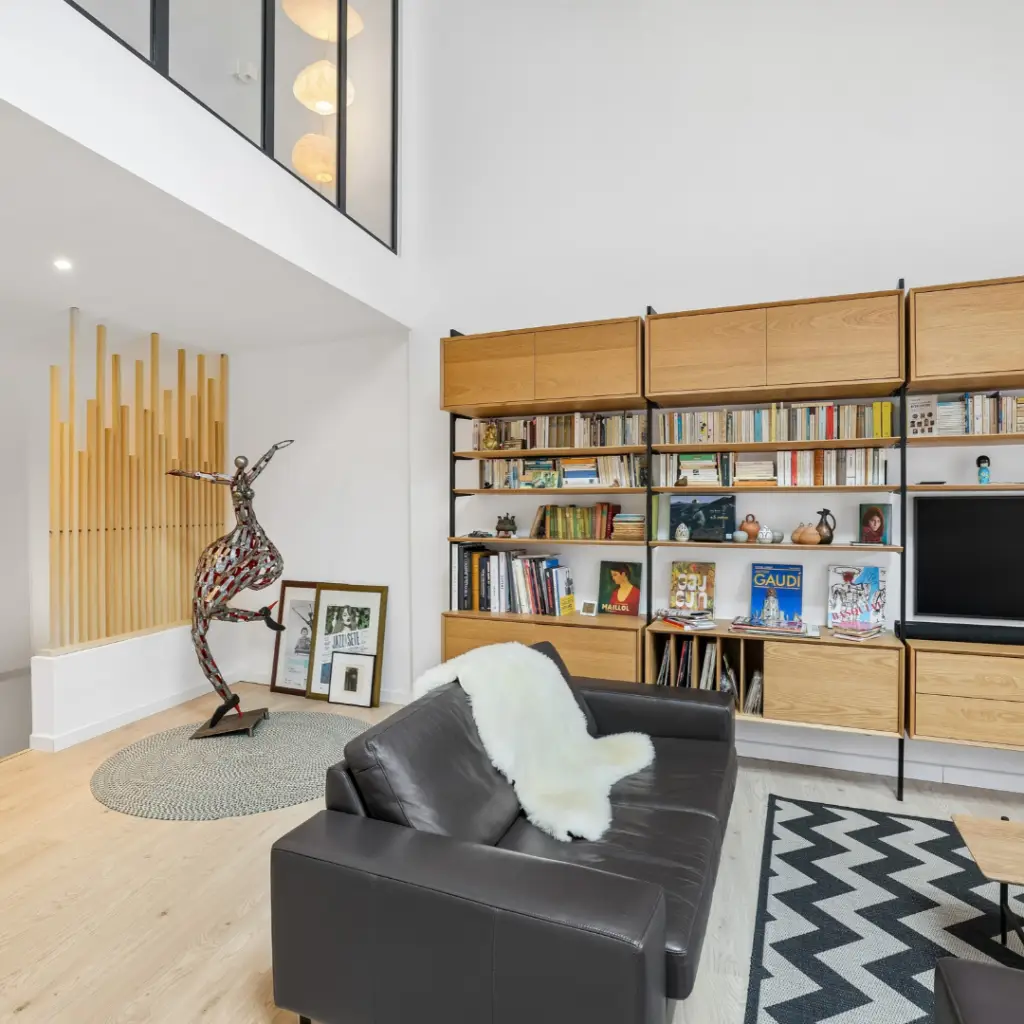 LEENHARDT | Rénovation complète d’un duplex de 145 m² à Montpellier : pièce de vie en double hauteur, mezzanine et escalier sur mesure. Conception et travaux AVOLTIS.
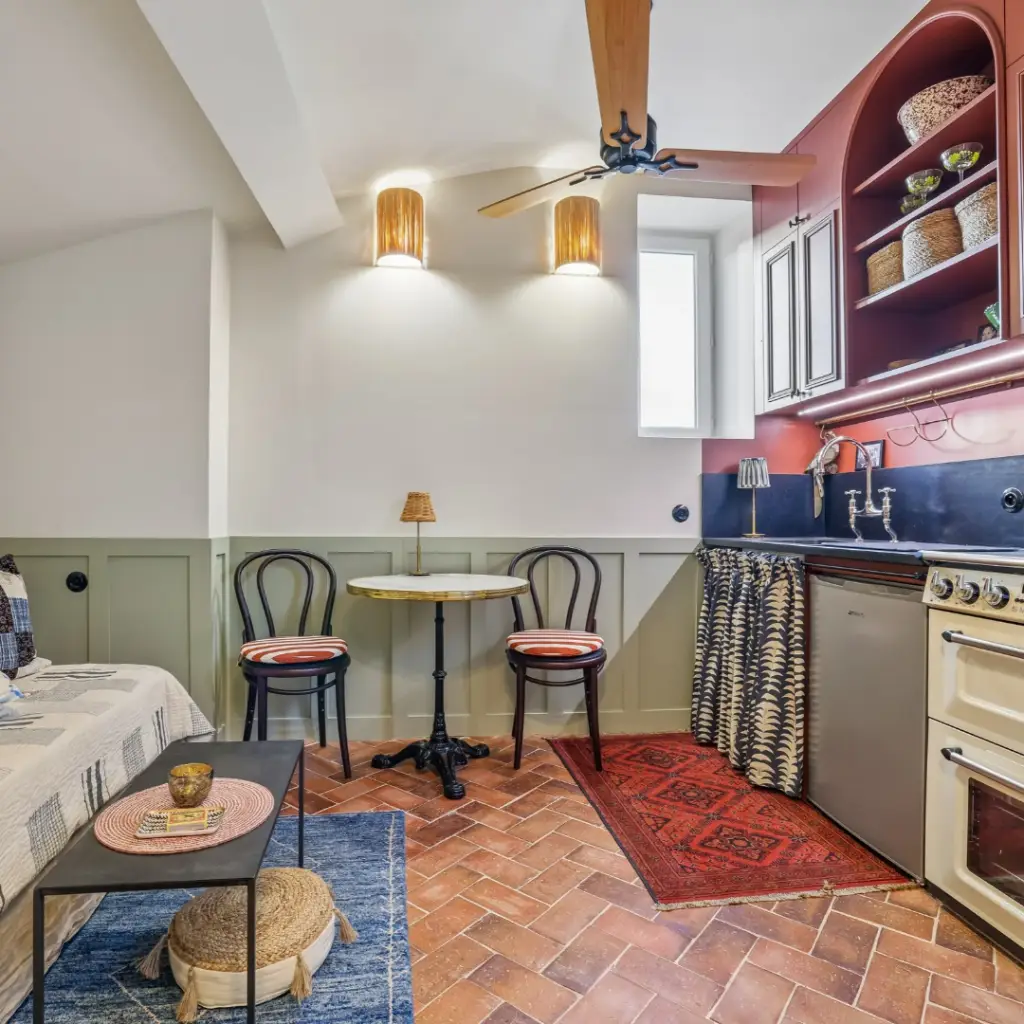 ROUDIL | Rénovation complète d’un studio de 35 m² à Montpellier : un pied-à-terre plein de caractère pour des clients vivant à l’étranger. Conçu par une architecte d’intérieur partenaire de notre Studio.
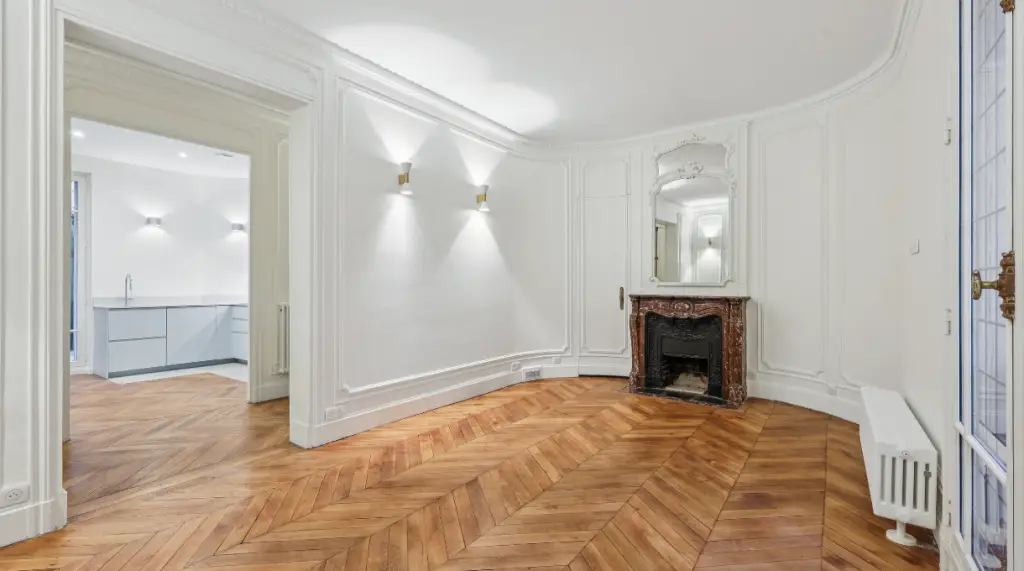
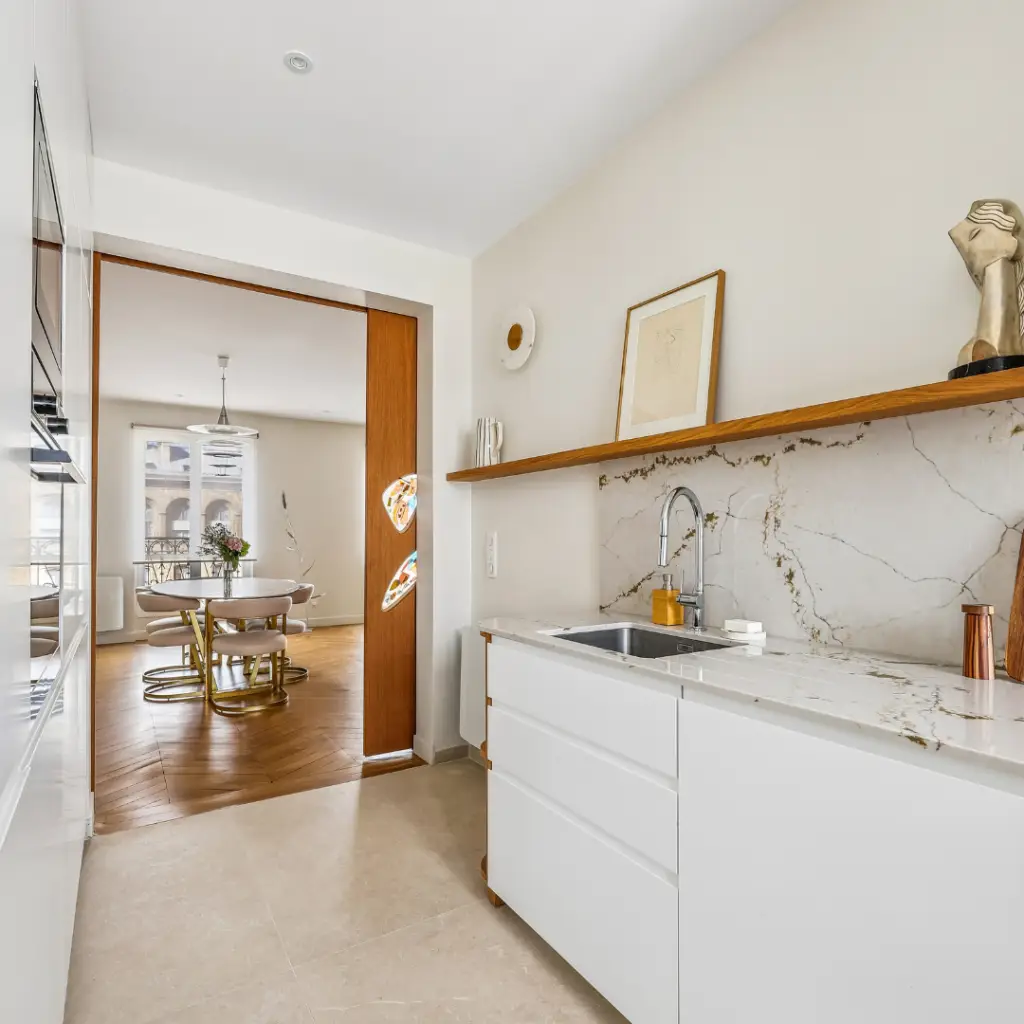 ÎLE DE LA CITÉ | Rénovation complète d’un appartement haussmannien de 102 m² sur l’Île de la Cité : parquet d’origine restauré, portes sur mesure et matériaux premium.
Ready to renovate with peace of mind ?
Looking to work with a professional to support your project? Contact us to get a free online estimate or book an appointment to check the availability of our project managers. Flexible and attentive, we adapt to your needs—we can come on-site to review your project and guide you through the next steps.
Which grants and VAT rates apply to renovation in France?
VAT and grants: VAT is 10% on renovation work in homes over two years old, and 5.5% on eligible energy-efficiency work (insulation, efficient heating, insulated windows). That work may also qualify for MaPrimeRénov’, CEE energy-saving bonuses and the zero-interest éco-PTZ loan, usually for a main residence, under conditions and with an RGE-certified contractor. Up-to-date amounts and conditions, in French: official Mes aides réno simulator.
Which permits do you need to renovate property in France?
Interior work that creates no new floor area usually needs no planning permission: a new kitchen or bathroom, a new layout or new floors can go ahead without an application to the town hall.
A déclaration préalable (prior declaration) is required as soon as the exterior changes (windows of a different style, roof windows) or you create more than 5 m² of floor area, for example by converting an attic. The town hall has one month to process it. Larger projects need a permis de construire (building permit).
In a co-owned building (copropriété), work on common parts, such as a load-bearing wall, or on the building’s exterior needs the approval of the owners’ general meeting, usually held once a year. Near a historic monument, the Architecte des Bâtiments de France also reviews the project. Build these delays into your schedule before signing quotes; the official French guide to the prior declaration lists every case.
Renovation company VS separate trades : pros and cons for foreign buyers
In France, you can either hire one renovation company that manages every trade under a single contract, or hire each tradesperson separately (corps d’état séparés): electrician, plumber, plasterer, tiler and so on. Both models are legal and common. They don’t carry the same level of risk when you live abroad. To understand the role in detail, see how a general contractor works in France.
| Renovation company (single contract) | Separate trades (one contract per trade) | |
|---|---|---|
| Point of contact | One project manager, often English-speaking | 3 to 9 contacts, mostly French-speaking only |
| Scheduling | Handled by the company | Your responsibility, even from abroad |
| Defects between trades | One company answers for the whole job | Each trade can blame the other |
| Price | Includes a coordination fee | Lower quotes, but hidden costs (delays, rework) |
| Choice of craftsmen | Selected by the company | You choose each one |
| Best for | Multi-trade projects, owners living abroad | Single-trade jobs, owners living on site |
Renovation company : pros and cons
Pros
- One contract, one contact : a single quote, a single schedule and one project manager reporting to you with photos and site meetings, wherever you live.
- Clear liability : if a defect appears where two trades meet (tiles cracking over badly prepared plumbing, for example), one company is responsible and deals with its subcontractors.
- Fewer language barriers : you don’t have to negotiate technical details in French with each tradesperson.
- Paperwork handled : quotes, insurance certificates, sequencing and handover are managed for you.
Cons
- Higher upfront price : coordination has a cost, built into the quote.
- Less control over who works on site : the company picks the craftsmen.
- Dependency : changing provider mid-project is difficult.
Separate trades : pros and cons
Pros
- Lower quotes on paper, with no coordination fee.
- Full control over each craftsman and each line of the budget.
- Well suited to single-trade jobs : repainting, replacing a boiler, new flooring.
Cons
- You become the site manager : planning who comes when, checking each stage before the next trade starts.
- Delays cascade : if the plumber is late, the tiler and painter are too.
- Disputes are harder to settle : one contract per trade means you must work out who is responsible for each defect.
- Hard to manage from abroad : without someone on site, problems are spotted late.
📌 Our view : for a foreign buyer renovating a whole property, a single contract is usually the safer choice. Separate trades work well for small, single-trade jobs when you can be on site.
📌 Vous parlez français ? Consultez notre comparatif détaillé : interlocuteur unique ou multi-artisans.
How do you find a reliable renovation professional in France?
When renovating in France — especially from abroad — it’s critical to work with trustworthy, insured, and well-organized professionals. Here’s how to choose the right team.

Insurance and legal guarantees
Always request proof of insurance before signing a contract. These guarantees are mandatory in France and protect your investment :
- Decennial Insurance (Assurance décennale): Covers structural or habitability issues for 10 years (e.g. roof leaks, cracked walls).
- Professional Liability Insurance: Covers accidental damage caused during works.
- Perfect Completion Guarantee (Garantie de parfait achèvement): Covers all reported defects within 1 year after delivery.
- Good Functioning Guarantee (Garantie de bon fonctionnement): Covers equipment like boilers or radiators for 2 years.
Certifications and official labels
Look for certified contractors. In France, these indicate experience and regulatory compliance :
- Qualibat – general building competence
- Qualifelec – for electrical work
- RGE (Reconnu Garant de l’Environnement) – required for eco-renovation grants (MaPrimeRénov’, Eco-PTZ)
Reputation and past work
Evaluate credibility with :
- Verified reviews (Google, Trustpilot)
- References and photo galleries of completed projects
- Legal registration checks (e.g. on société.com)
- Recommendations from local architects or trusted networks
Transparent and details pricing
A professional contractor will provide a detailed quote (devis) that includes :
- Clear scope of work
- Materials and quantities
- Breakdown by task
- Timeline and payment schedule
Avoid vague estimates or excessively low prices, which may hide future cost overruns.
Project support and communication
Choose companies that offer :
- A dedicated contact person
- Clear progress updates and milestones
- A structured contract with deadlines and penalties for delay
- Staged payment terms, based on work progress — not upfront lump sums
Relationship and trust
Good communication is key. Reliable contractors :
- Are honest about possible delays or challenges
- Set realistic expectations
- Don’t promise the impossible to win the deal
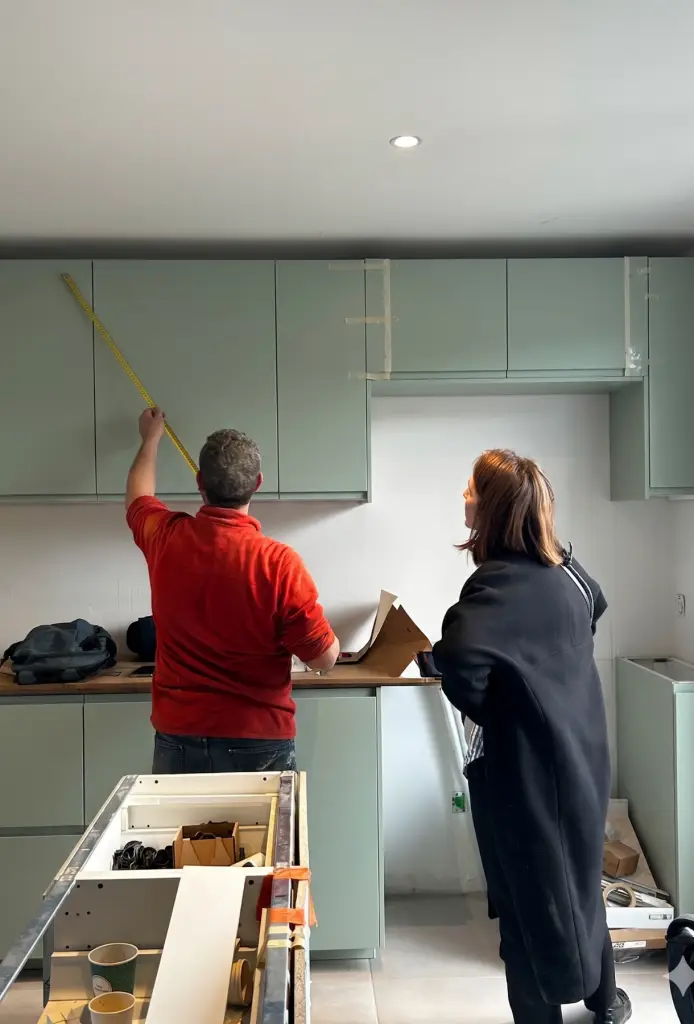
Please discover our team if you want help in your project.
Useful resources & tips
- Find properties, outside professional networks : LeBonCoin, Green Acres. The town hall of the city you’d like to live in can also provide information on properties for sale.
- Find good contractors : network of local architects and interior designers, professional directories (Bilik, Les Pages Jaunes).
- List of documents and diagnoses to receive from the owner or real estate agent when buying a property:
- Diagnostic de Performance Energetique (DPE)
- Contrat de Risque d’Exposition au Plomb (CREP)
- Asbestos
- Electricity (mandatory if the electrical installation is over 15 years old)
- Gas (mandatory if the gas installation is over 15 years old)
- Termites (in certain zones)
- Etat des risques et pollutions
- Mesurage Loi Carrez
Tips
- If you’re buying a property to renovate, call in a professional to carry out a pre-purchase appraisal or feasibility study.
- If you’re buying a property to renovate, spend time planning the project to optimize time. Don’t be in too much of a hurry, to avoid making mistakes or leaving room for unforeseen circumstances.
- Draw up several estimates to compare services and prices.
- If you’re on a tight budget, prioritize comfort and safety work, then concentrate on the rooms you spend most time in.
- If you’re applying for a loan for the work, you’ll need to present invoices for the purchase of materials and installation to your bank.
Ready to renovate a property in France? We operate in 4 regions in France: renovation Paris & Ile-de-France, renovation Montpellier & Herault, renovation Amiens & Somme, renovation La Rochelle & Île-de-Ré. Use our free online estimation tool to get a quick quote — or contact one of our renovation experts to discuss your project today.
FAQ : Frequently asked questions about property renovation in France
How much does it cost to renovate a house in France?
Renovation costs in France vary widely depending on the property’s size, condition, and the level of finish desired. For light cosmetic work such as painting and flooring, expect €400–€1,000 per m². A full renovation involving plumbing, electricity, insulation, and structural changes can range from €900 to €1,600 per m². Luxury or heritage renovations in stone or Haussmann-style properties can exceed €2,000 per m².
Can foreigners buy and renovate property in France?
Yes. Foreign nationals enjoy the same property ownership rights as French citizens. There are no restrictions on purchasing a renovation project, and you can apply for building permits and government renovation grants. However, non-EU residents should factor in additional administrative steps such as opening a French bank account, hiring a notaire, and securing appropriate insurance.
How long does a renovation project take in France?
Timelines depend on the property’s condition and project scope. Small refurbishments may be completed within 2–4 months. A full renovation—especially one requiring permits, architectural plans, and multiple trades—can take 6 to 18 months. Delays can occur due to planning approvals, weather, or material availability, so it’s best to build contingency time into your schedule.

Cédrine is a specialized content writer for Avoltis Rénovation, focusing on the field of renovation. Drawing on her solid background in real estate and construction, she translates complex subjects into clear and practical articles. In direct collaboration with our experts, including project managers and construction supervisors, she collects best practices and field experience to ensure the reliability and relevance of the content published on our website. Her objective is to assist our readers in better understanding, planning, and successfully completing their renovation projects.
Cédrine, Content Writer at AVOLTIS Rénovation
Ready to renovate with peace of mind ?
Looking to work with a professional to support your project? Contact us to get a free online estimate or book an appointment to check the availability of our project managers. Flexible and attentive, we adapt to your needs—we can come on-site to review your project and guide you through the next steps.